

He came to us at the end of a hot summer. I say he came to us even though we chose to get in the van and drive to the shelter on the day they advertised TOTALLY FREE ADOPTIONS because we walked down all the aisles among all the kennels and saw dogs of all shapes and sizes and breeds and at the very end, there he was. It may seem a stretch to say that he was waiting for us, but my husband had been dreaming of a bluetick coonhound since he was a child. This was going to be his first dog.
Our boys wanted a puppy, though, and we spent time with one in a little room with benches off to the side of the kennels, but other people had already met the puppy and were deciding if they were going to adopt it. When we were told the puppy was spoken for, we said we would take the hound, who the employee said was probably two or three years old.
As they processed the paperwork, I held our four-month-old daughter and looked over the adoption papers and noticed that this dog had already been adopted before, but he had been returned for “behavior issues.” Perhaps this should have been a red flag, but this made my husband want the dog even more, because he felt so bad that the dog had almost had a home and then had been brought back. We would not bring this dog back.
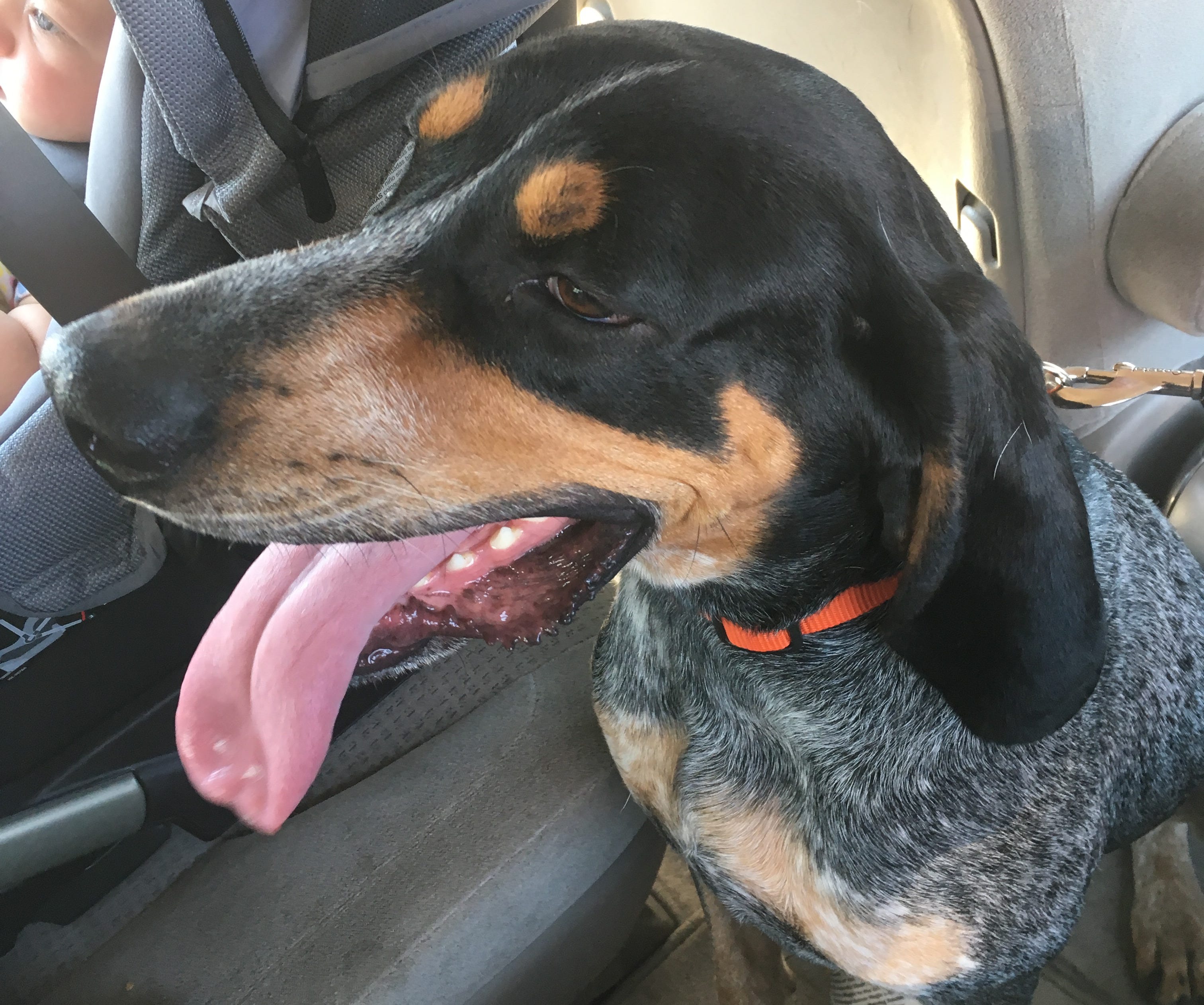
We did though, almost, several years later, but we’re not there yet.
When we arrived home we found that there were pros and cons to having adopted a dog, not a puppy. For example, he was house trained. He only had a few accidents in those first few weeks. He was also crate trained, on account of the fact that he had been a hunting dog before he was abandoned and had spent most of his life in an outdoor kennel. The fact that he had only ever lived outside also turned out to be a downside in that he did not initially understand the concept of furniture. The table was not a structure at which humans sat, but rather a small obstacle he could explore. One day I came home and found all 80 pounds of him standing on the dining room table, sniffing flowers in a vase.
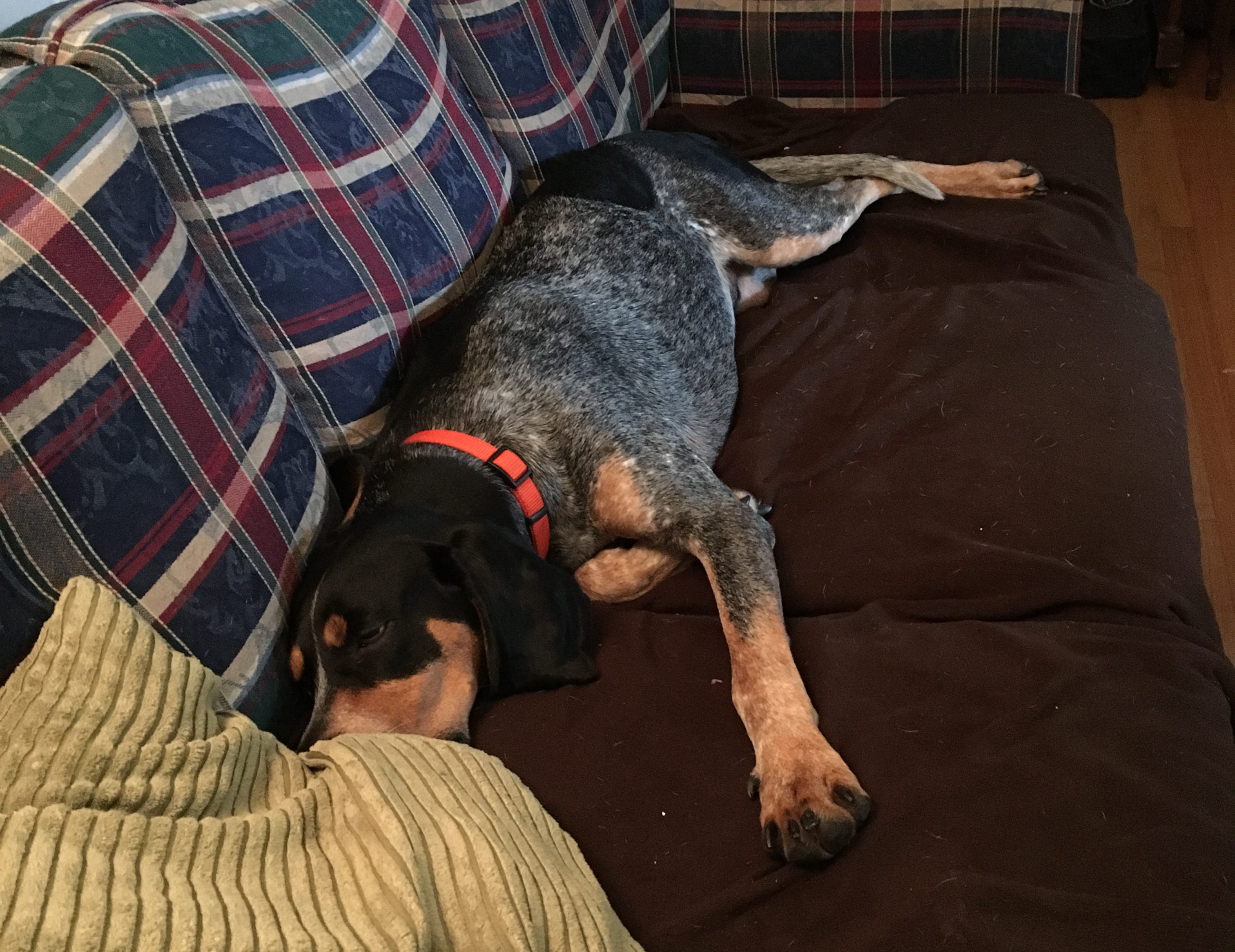
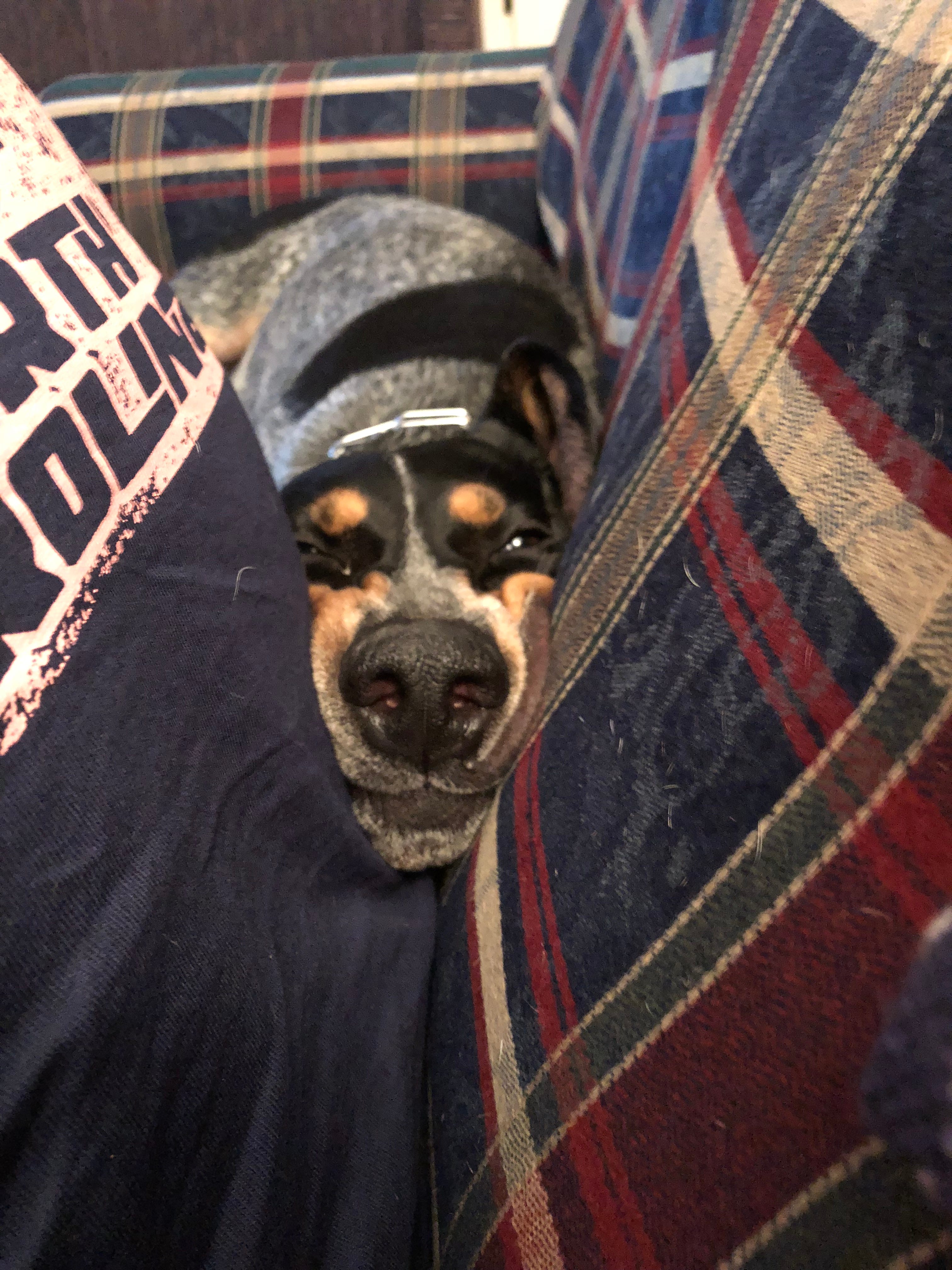
His very favorite place to be was on a couch, and it was even better if someone else was also on the couch.
Our daughter was four months old when we brought him home, so from the very beginning, I spent my days tending to one or the other or both. Going for a walk was a relief, because both of them were occupied—her in the stroller and him on the leash.
It was quickly obvious that he had not been able to count on frequent meals. We had to get him a special food bowl that forced him to slow down his pace of eating so that he wouldn’t make himself sick.
He was also an opportunist when it came to human food. Nothing was safe. While it might seem like this could be managed easily, as a mom to three kids, I was constantly distracted, and so I was forever leaving food somewhere for just a minute and forgetting the dog could snag it. I sometimes thought he was watching me through the walls, just waiting for the chance to pull the bowl of popcorn off the counter.
After a few months of this I was at my wit’s end. This dog needed to be trained, and I couldn’t figure out how to do that. At the advice of a person who I now realize was a dog person, we hired a positive behavior dog trainer, which is basically gentle parenting for dogs. Gentle parenting works for some children, like the ones who were already born compliant in the first place. Gentle dog training did not work for our dog, at least not in a way that kept him from stealing food. He was smart as a whip and quickly caught on to the fact that if he did as commanded, he would get a treat. However, this could do nothing to stop him from getting food off the counter. I wasn’t going to reward him for not stealing food, although to him this probably would have been the ideal outcome.
We eventually did what is I guess the opposite of gentle parenting and became authoritative dog parents, which is to say we bought an electronic collar. I will not debate whether these are appropriate for dogs because in our experience, it was the only reason we were able to keep our dog. I watched dozens of videos on how to use it and we were eventually able to make him associate the shock of the collar with his proximity to the counters in the kitchen. We also put up baby gates around the kitchen entrances, which took some experimentation, because if we put the gates flush with the floor, he could jump over. But if we put them up too high, he would squeeze himself under.
Here is a list of some of the things he ate without permission: a pound of butter (packaging and all); a pan of brownies; a package of tortillas; a chocolate cake layer cooling on the counter for our son’s eighth birthday; the edible contents of the indoor trash can; the edible contents of the outdoor trash can; freshly fried catfish; innumerable cheesesticks out of the hands of our children; half of a pizza.
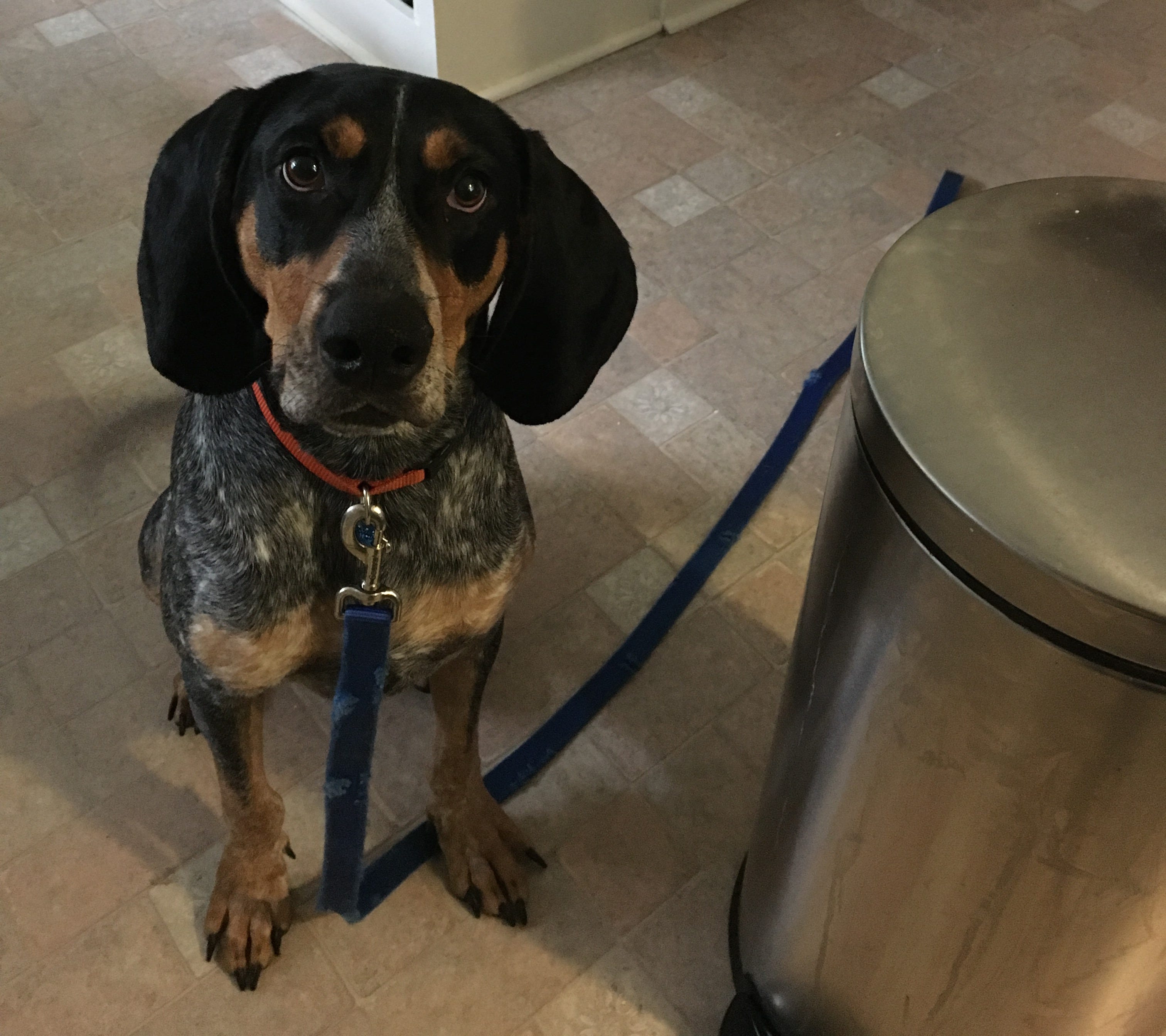
He could walk for miles. I would get up early and walk three miles with him before anyone else got up, and he would seem willing to keep going. I would walk him again later in the day with the kids. Eventually we fenced in the backyard and that gave him more space to run around, except for the times when he managed to jump the four-foot fence and escape into the neighborhood.
This only happened when my husband was out of town. I’d let the dog out, go about my evening activities, and then when I would go to call the dog in, there would be silence. At that point I would make sure the kids were safely tucked into bed and call my neighbor, who loved our dog as much as we did, and we would scour the neighborhood looking for him.
He was easy to find if he was in the process of hunting a critter. His bay was so loud as to hurt your ears, and we would follow the sounds of his baying to his location, at which point we would have to try to shake him out of his blind rage at whatever rodent had attracted his nose. One time he managed to get into the fenced backyard of an abandoned home. I climbed over the fence, got him away from a tree, picked him up and lifted him to my neighbor over the fence, and then climbed on a trash can to get back over. I’m still surprised we didn’t get shot. (These situations only happened at night.)
He was a friendly dog, but his unknown prior trauma showed itself unexpectedly. One time our friend’s son put on a camouflage jacket as they prepared to leave, and the dog began to whimper and whine and back away from the child. He mostly hated men. This gave us some hints as to what he had experienced before he came to us.
When we began to plan our move from South Carolina to Georgia and made an offer on a house, the fact that the yard was not fenced in began to cause me great anxiety. I was pregnant and we would be moving with a newborn baby and three other kids. I didn’t know how I would manage a high-energy dog along with all that. Without telling my husband, I e-mailed the shelter and explained our situation and asked what the process would be to return him to the shelter. They were very understanding and we set up a timeline, but when I talked to my husband about it, I knew we would never be able to go through with it. “I’ve already lost my job and our home here,” he said. “I can’t lose my dog, too.”
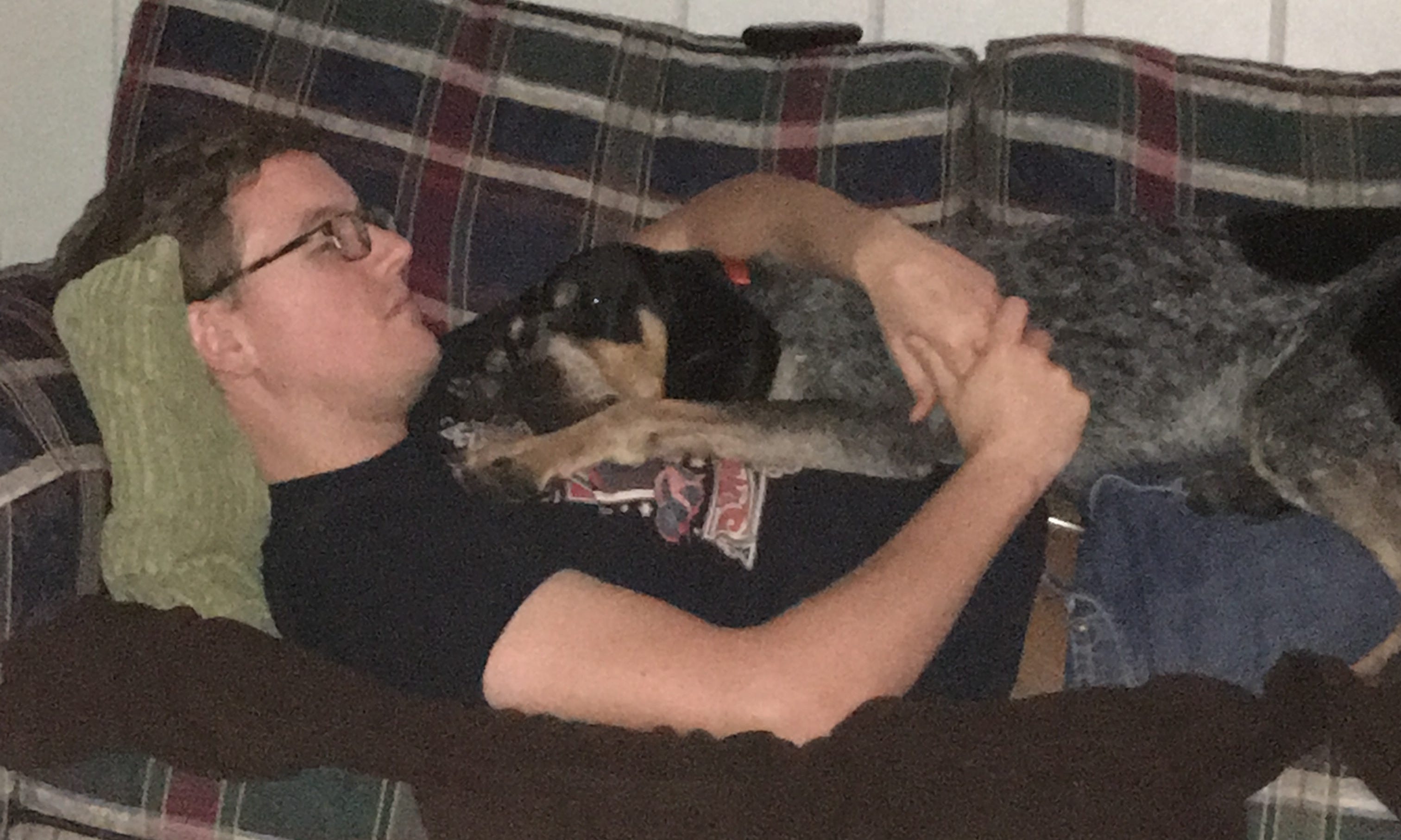
Neyland was his dog, as he had been from the beginning when we first laid eyes on him. But I was Neyland’s person. This made sense, because I was the one who had spent hours training him, walking him, living with him, including him in every activity I did with our daughter because he couldn’t be trusted to be left alone. But after our fourth child was born and we moved and there was a pandemic and I felt like I was losing my mind, I did a reverse Grinch: my heart shrunk. All the love for my children was still there, but there was no room left to love the dog.
I say this to my shame. We had had the dog for three years by then, and he had established himself as a member of the family. But when I looked at him, all I saw was work. He was one more thing I had to manage, and four kids felt like more than enough. As he got older, he became less energetic, which was a relief, but his nose for left-out food never left him, up until his final days.
One of the things that kept him in my good graces was the fact that he was never aggressive toward our kids. As far as we knew, he had never been around children. I was a little nervous bringing him into a home with a four-month-old. As she became more mobile, I watched him like a hawk, but he was only ever gentle. We have a video of her pulling up by holding onto his back and then launching herself over him in an attempt to ride on him. He just sat there, a little nervous, but he seemed to know that she was part of his family and he needed to be gentle.
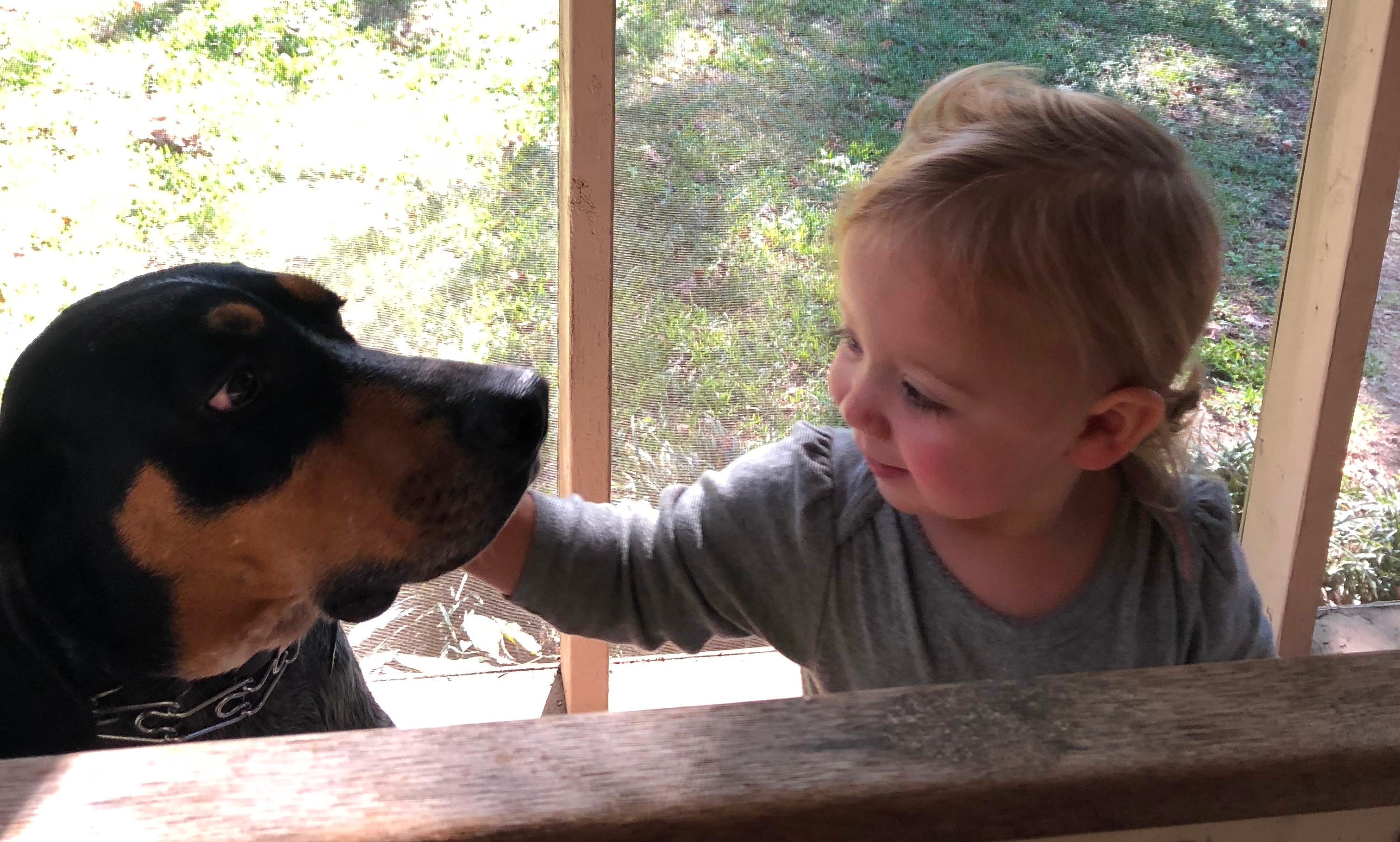
It was the same when our fourth child was a toddler. He loved Neyland and was forever crawling into the crate with him, touching his ears, touching his tail, following him around the backyard. Neyland would sometimes try to escape, but he never turned any aggression toward Noah.
He was a beautiful dog. When I walked him in the middle of the day, I always got compliments, even as people kept their distance. He was big and he was black and as I have already said, his bark was loud. I don’t know what he would have done if he ever felt like I was threatened, but I was never afraid to walk with him after dark. He was the best bodyguard.
When Christian was out of town, I would let Neyland sleep out of his crate. I considered him a built-in burglar deterrent. Someone might make it into the house, but I was pretty sure they’d attempt to leave quickly once they made eye contact with him.
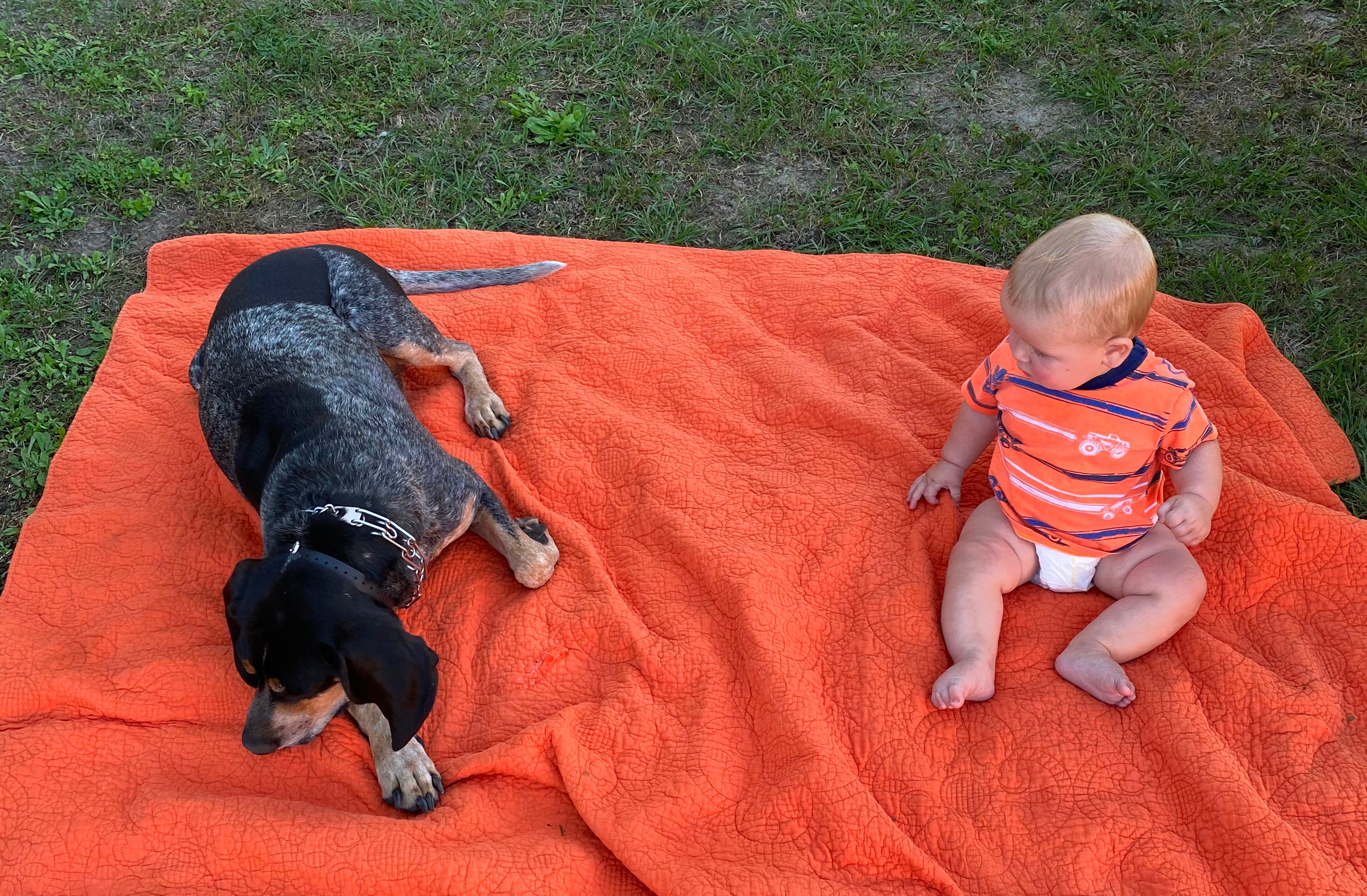
Neyland loved to lay in the sun. He had a few favorite spots in the backyard, and those were the first places I looked when he wouldn’t come inside when I called. Because he was frequently finding a way out of the backyard, I would get nervous that he’d escaped, but then I’d go check one of his preferred spots by the compost pile and there he would be, his eyes blinking sleepily as I explained he needed to come when I called. I usually had to pull his collar to get him to come back inside.
When we first moved to Georgia, one of our first home improvement choices was to have a fence put in. I remember the relief I felt the first time I let him out and didn’t have to keep him on the leash. I could let him out and leave him there and do something else.
The relief was only temporary, which I should have expected, given his previous successful escapes at our old house. Perhaps I thought the fact that our six-foot fence would be more of a deterrent than our previous four-foot fence. He was, indeed, unable to jump over the new fence.
But our yard backed up to a huge undeveloped piece of land, a land I imagine was teeming with all the best critters and rodents. Neyland could smell them, and he needed to catch them. He very quickly figured out how to dig under the fence. First we tried pouring in concrete under the fence. He dug out the concrete. We tried burying chicken wire, and he cut himself while also managing to dig around it. Finally we bought several dozen tomato stakes and hammered them into the ground every 6 inches, almost like a miniature underground fence.
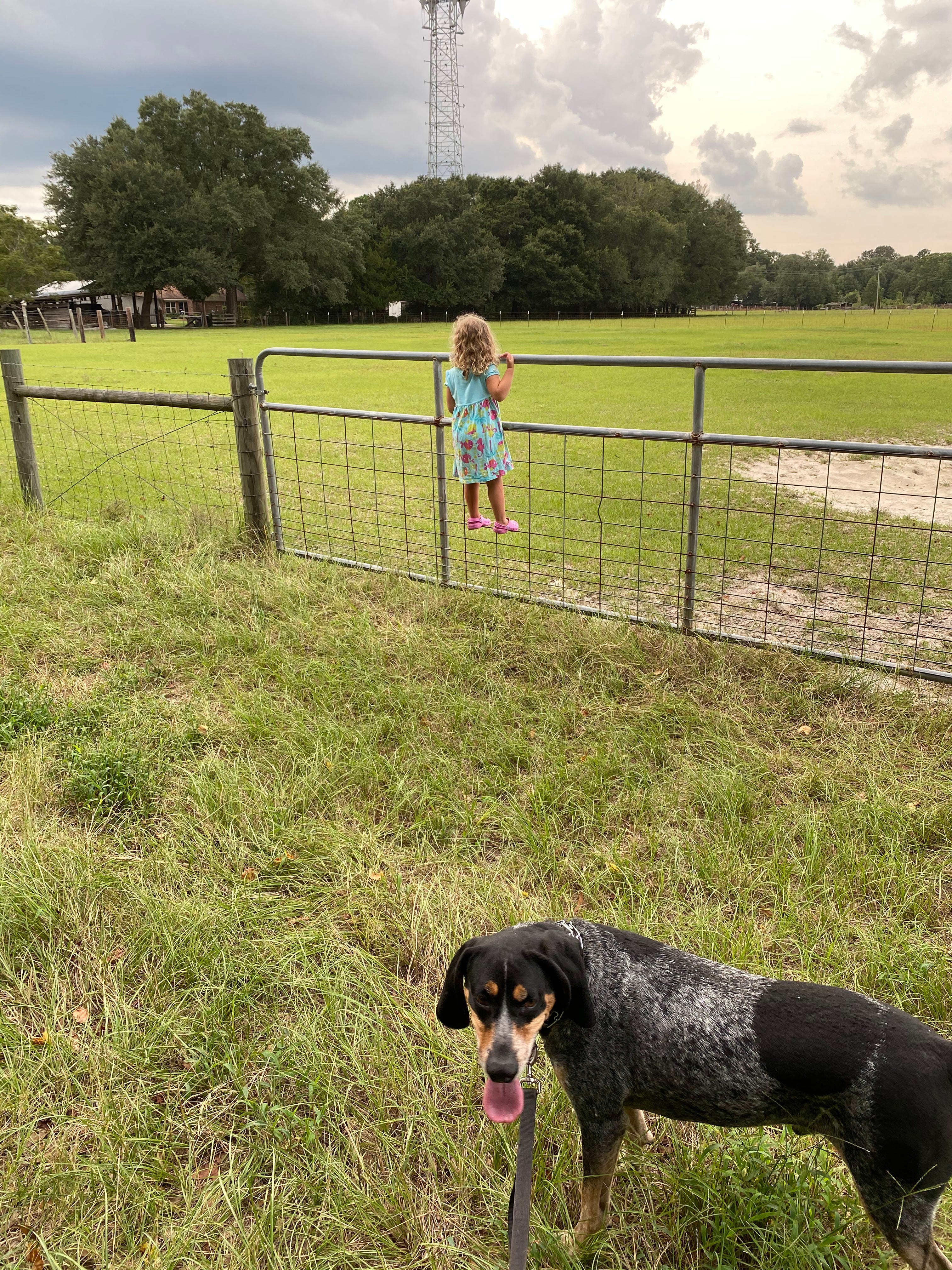
He still got out, though, because sometimes our kids or neighbor kids wouldn’t close the gate on the fence all the way, and he must have checked the gate every time we left him out. When he did get out, he was not a runner but more of a roamer. After my mother-in-law moved into our neighborhood, we would frequently find him in her unfenced backyard. She’d call us and let us know her “grand-dog” had come for a visit. One time he had been in the backyard and we were watching a movie one evening and lost track of time. Suddenly, we heard a bark at the door. But not the back door. He was barking at the front door. Apparently he had escaped the yard, gone on a long roam through the neighborhood, and then returned home when he was finished. He trotted inside as if this was part of his nightly routine.
Having people over was always complicated. I’d make sure that he was in the crate before they arrived, but that did nothing to stop the barking that would commence when our guests knocked or came into view. This barking would continue for several minutes. Usually, he’d accept the presence of our guests. But for people he took an especial dislike to, he’d bark any time that person walked anywhere in the house. Because he was often unpredictable with visitors, we didn’t like to let him out of the crate while people were there. But he did not like being in the crate with people there, so he would whine and grumble and occasionally bark until we took him to the backyard. Then he would bark to come inside, and we would return him to the crate, and the cycle would continue.
Unlike many dogs, he was not afraid of fireworks or thunderstorms. He was afraid of our robot vacuum and the donkey who lived down the road.
On an ordinary Tuesday afternoon at the beginning of March, I went to let him out and something seemed off. He was walking unevenly; his stomach looked distended or bloated; he seemed to be breathing harder than normal. When he came back in, he struggled to lay on his bed in the living room.
I called the vet and we made an urgent care appointment for a few hours later. My brain began spinning. We told all four kids that we were going to take Neyland to the vet, and we weren’t sure what would happen, but he was an old dog, and it was possible we would need to say goodbye. This felt overly dramatic at the time. I hoped I hadn’t gotten any of them—Zoe in particular—upset over nothing. When I told her, she burst into tears. Without thinking, I asked if she wanted to go with me when I took him to the vet, and she said yes. I didn’t know if she should go, but now I’d offered. I felt guilty but then I also felt a sense of relief that I wouldn’t be going alone.
As it turned out, Christian went as well, because I realized that if he was struggling to walk, there was no way the dog would be able to get into the back of the van. Christian could help me get him in, but I wouldn’t be able to get our 90-pound dog out of the van alone. Christian, Zoe, and I would all go, and as soon as Stephen was done with his driving lesson, I’d go pick him up and take him back to the vet. Cohen and Noah didn’t want to be there.
I felt like I was in limbo for those two hours while we waited to go to the vet. I had been working, but now instead of working I was typing the dog’s symptoms into ChatGPT. It did not seem like this day was going to end well. Then I had to make dinner, and Zoe and I scarfed down some food and made a plate so Christian could eat in the car. Noah went to play with the son of a neighbor, who graciously offered to keep him until we got home. Cohen was at an after-school band practice; my mother-in-law would pick him up.
When it came time to go, Christian tried to get Neyland to stand up. He wouldn’t. It took me, Christian, and my mother-in-law to carry the edges of his dog bed, with the dog on it, out to the car.
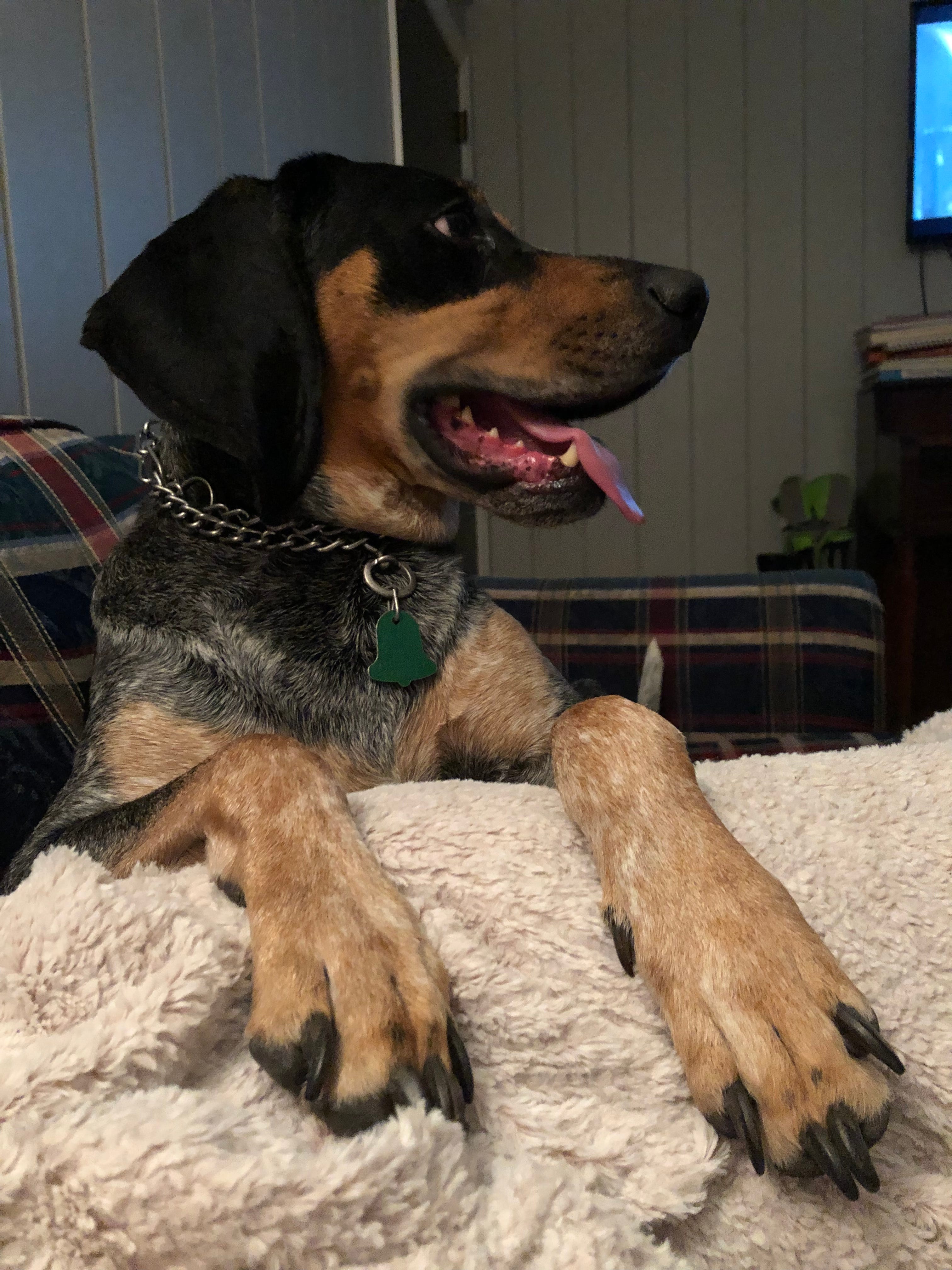
The only place we ever took him in the car was the vet, with a few rare exceptions, and this was not something he enjoyed. Our yearly rides consisted of him barking and howling for the entire 10 minutes of driving. On that day, though, he didn’t make a sound.
As soon as the medical assistant came out to the van to see the dog while we waited for help to get him inside that it truly began to hit me that we were going to have to say goodbye. She noted that his gums were white—they were supposed to be pink. I had already noticed that his paws were cold, and that the whites of his eyes were whiter than usual.
The time we spent at the vet, waiting for the vet, waiting for the assistant, and then me driving to get Stephen to come back, and more waiting, feel like a strange dream. The vet diagnosed him with a ruptured spleen, a common ailment in older dogs, but one that can only be fixed with surgery. This surgery may or may not help him return to normal. Through tears we said that we did not want to do surgery. They were compassionate, saying that they could wait while I went to get our oldest son from driving lessons. When we got back, we found they had a special room for people in our situation, with a comfortable bed for the dog. We took turns sitting with him.
While I had been gone, Christian explained cremation to Zoe. When I got back and the medical assistant came in to give the dog the first injection, which would keep him from feeling any pain, she explained what she was doing and she asked if we had any questions. Zoe immediately said, “Yes—I have a question. What will you do with his body after this?”
The woman’s eye caught mine and I nodded, telling her that we had already talked about cremation, but I thought that Zoe was asking about where the dog would be until it was time for that.
“Well,” she said measuredly, “We will keep his body in a very cool place, and we will keep an eye on him.” Zoe seemed satisfied with this.
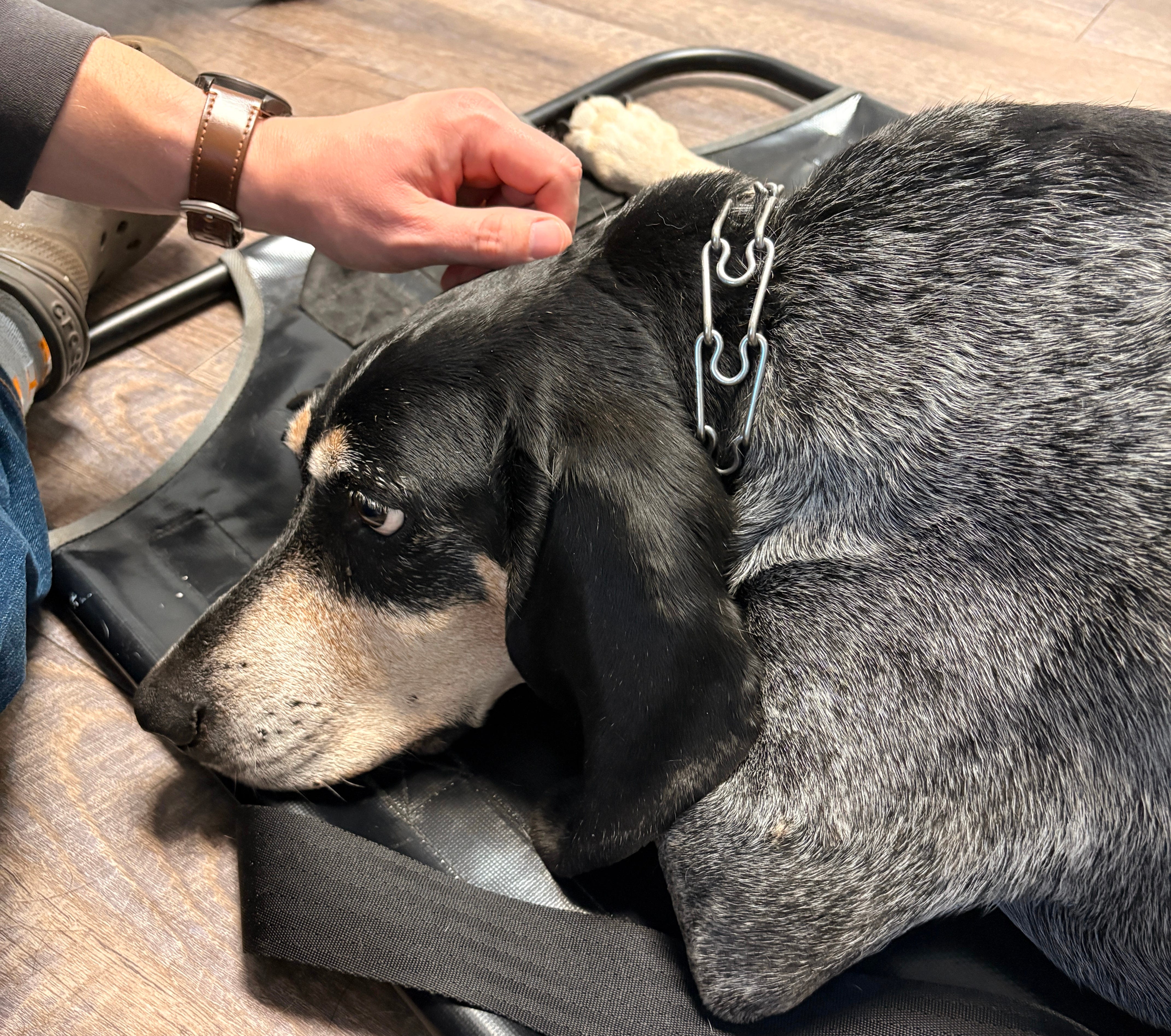
We all stayed until almost the very end, but before the final injection, I looked at Zoe and asked if she wanted to stay for that part. She thought for a second, and then she seemed to fully grasp what was about to happen, and she said she didn’t want to be there. I left Christian and Stephen with Neyland, and Zoe and I went out to the waiting room. I was torn over wanting to be there, to support Christian, to stay with the dog until the end. And yet I felt Zoe had experienced enough for one day, and if she didn’t want to be there, I didn’t want her to have to be.
This ended up being a gift, because my last memory of Neyland was with his head in my lap as he dozed off from the pain relief injection. He was alive and with his favorite people, and he was not in pain.
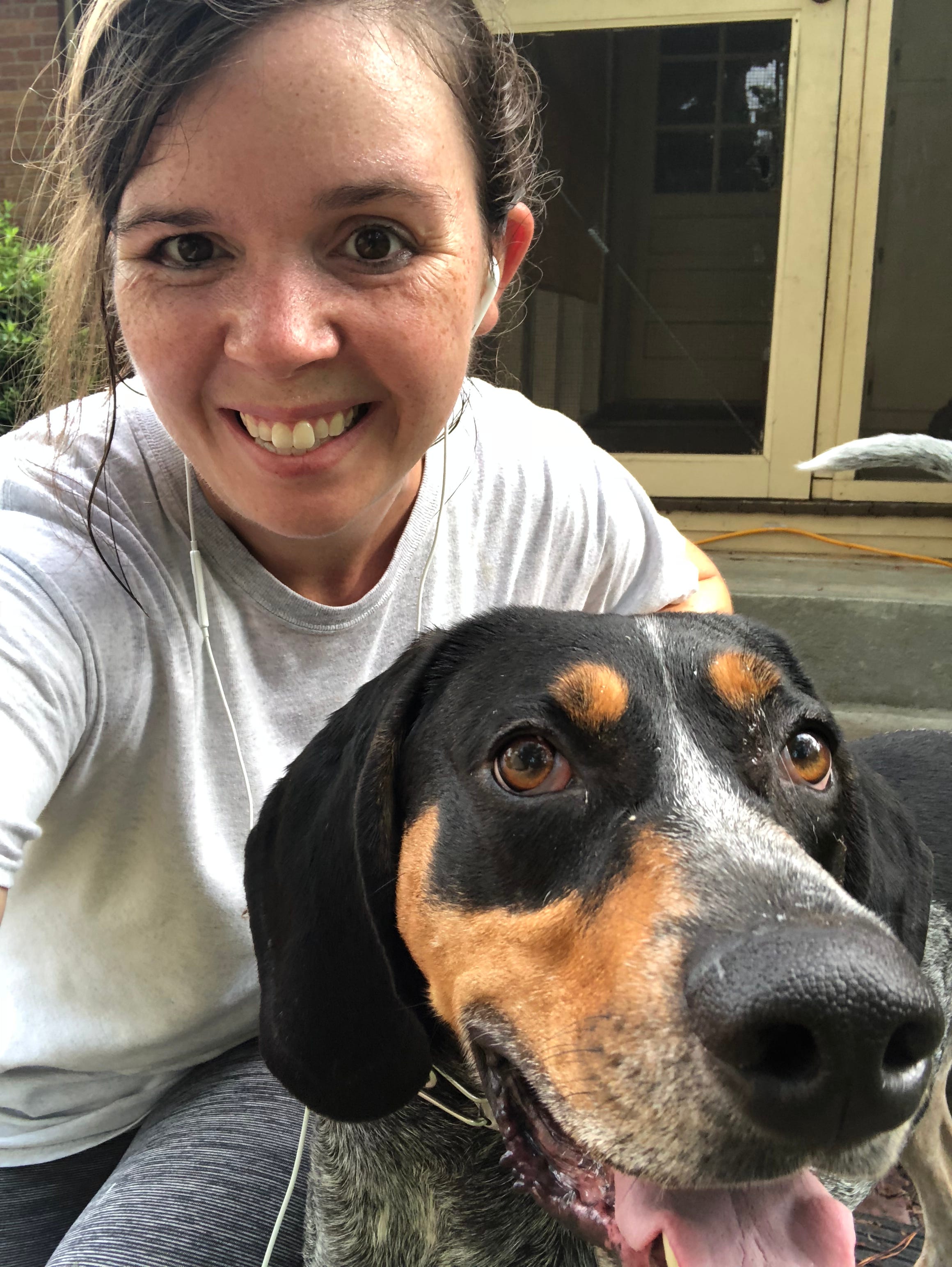
It wasn’t until I started looking back at pictures that I realized why Zoe’s grief had been the loudest. Her entire life was lived in proximity to Neyland. When she was a toddler, the three of us spent our days together. Even as she got older and other things pulled her away, she was always gentle with him, always willing to give him food or water if someone else forgot, always happy to let him in or out. In those old pictures I see snapshots of her love for him.


It has only been a few weeks, and the kids are already asking when we will get another pet. We are putting them off in an honest way, telling them that we are open to another pet—a dog or even a cat—but that it feels too soon right now. “Over spring break?” Noah asks. “Not quite that soon,” I say.
I think I would have always said I was a dog person, but I balked at the idea of being a “dog mom.” Neyland was not a person. He was a dog. And even at the very end, I chose to be with my human child in her grief than to stay with the dog.
But I did love him. It’s hard not to love someone who loves you so much, even if my love for him got crowded out by the myriad other things that call to me every day. When I come down the stairs and into the living room, I always look to the spot where his crate used to be. I have to keep reminding myself it’s OK to leave a loaf of bread on the counter and that we don’t immediately have to take out the trash bag with chicken bones in it. We can grill without worrying about him leaking the grease trap. There is no more barking when someone knocks on the door. The Amazon delivery driver has been relieved of his (unbeknownst to him) arch-enemy. The house feels slightly less empty.
Another dog or cat may enter our home, but there will never be another Neyland. He was our family’s first dog, and he will live on in the retellings of his many antics.
It wasn’t until he was gone that I realized, in my own way, that I had incorporated him into my daily life without thinking about it. I am notorious for forgetting passwords. I am forever having to reset them. At the beginning of the year, I decided to pick a new password that I could use anytime I needed to reset a password, in hopes that eventually all my passwords would be the same. I used “Neyland” as part of my new password, not really putting much thought into it, because Neyland was just as much a part of my life as my high school mascot or my husband’s favorite sports team or the make of my first car (all of which I have used in passwords in the past).1
He loved bread, popsicles, fuzzy blankets, sunlight, long walks, anyone’s leftovers, but, most of all, he loved us.
I’m not worried about anyone using this information to hack into any of my accounts, because I have already had to move on to another word as the basis of my reset passwords, because I keep forgetting if I already reset it with the Neyland password or not, and then it eventually locks me out and I have to use a password I’ve never used before.
Well now you made me cry...
I loved my "Grand-dog" too and it is always gut wrenching when we have to say goodbye to our beloved pets! 💔
No one loves you like your dog and especially a rescued dog. Take comfort in knowing you gave him a safe and loving home and a good life. I'm so glad you take so many pictures. You will all have wonderful memories of Neyland Hank Crouch. He was a good boy and was one lucky hound the day he went home with you guys!!!
What a lovely tribute. I appreciate your non-"pet mom" perspective Neyland as I feel the same about our dog Ollie and am his "person." But they are still a sweet thread woven into our lives and losing them leaves a sad hole. He was a beautiful dog with a great story. Thank you for sharing.