

There is nothing I love more than a new year. I remember a few years ago when the new year started on a Monday, and we got a new year, a new month, and a new week all at the same time. I’m still reliving that glorious day.
Like many people with personalities like mine, as the year ends, I start to get this mildly anxious feeling about setting goals. I don’t want to call them resolutions because that’s what *everybody* does, and I like to be *different.* And yet the siren song of the new year beckons me, telling me I must make plans that I will somehow commit for the next 365 days, which is a very long time.
I have come to the point where I don’t really set goals for any area of my life in the new year, because I think planning to do something for a whole year sounds great on paper but rarely works out. I also find that I tend to make goals that involve restriction of some kind. I’m all for self-discipline, but I don’t think it’s a true moral victory to avoid sugar, or soda, or whatever for a whole year (and life’s too short to live a whole year without Cherry Coke Zero).
When it comes to my hobbies, though, I actually enjoy setting goals and making plans. If I don’t end up following through with them, I don’t feel like I’ve failed, because I’m usually still enjoying my hobby. Case in point: Last year I decided to do a cross-stitch challenge called WIPGO. The basic premise is that you take the numbers 1-25 and assign one of your works-in-progress (WIPs) to each number along with a goal for that project. Then, each month, the creator of WIPGO pulls two numbers and announces them in the WIPGO Facebook group. It’s meant to help people actually finish or make progress on projects that have been “in progress” for a long time. I made a cool grid of my WIPGO projects in my bullet journal and stuck to the challenge for more than half the year.
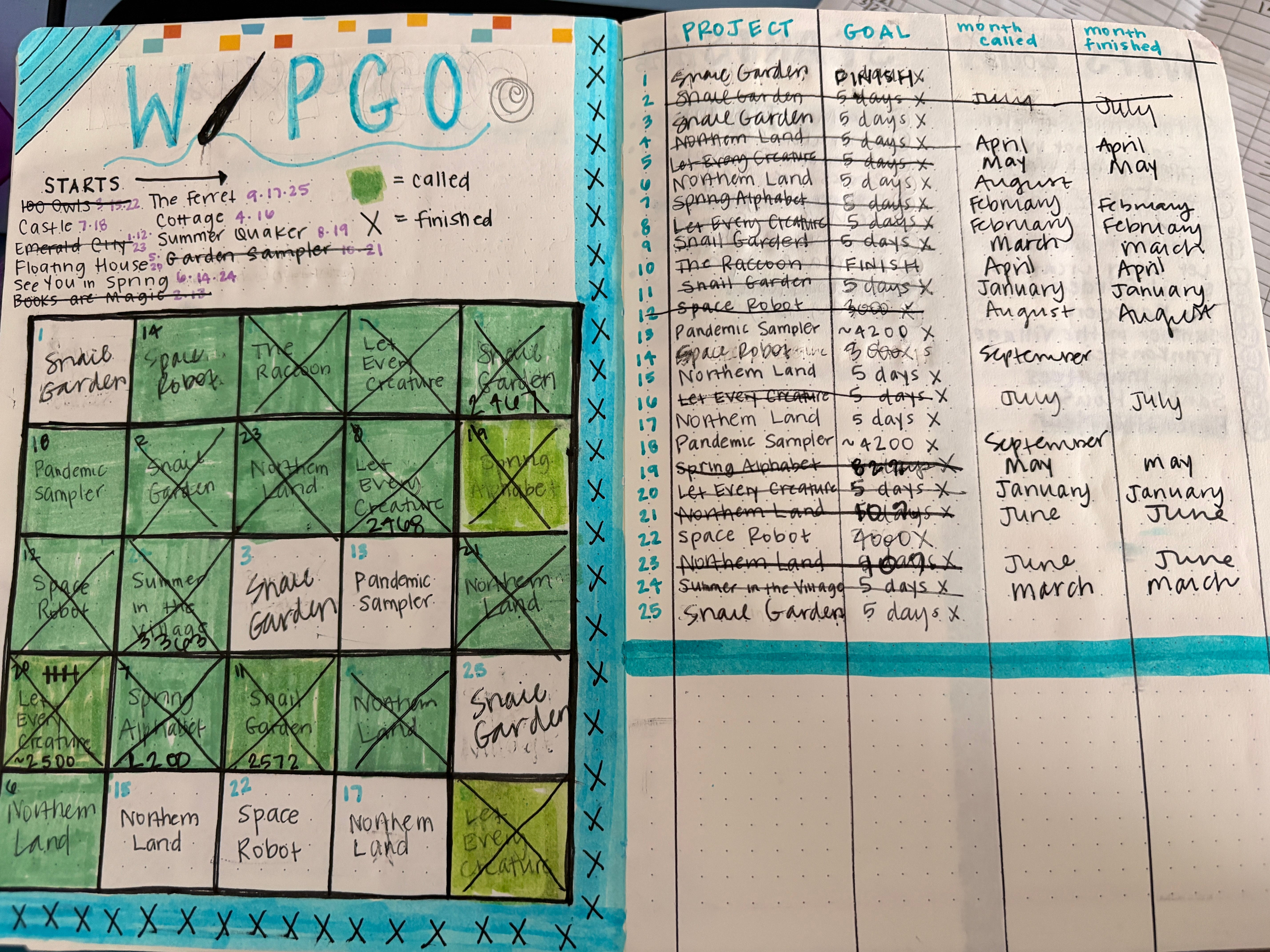
I didn’t ever consciously abandon the challenge, but I stopped working toward my WIPGO goals sometime around the end of the summer. I’ve still been cross-stitching, but not as part of WIPGO. And that’s been OK with me! The point of WIPGO is to have fun, and once it became a burden and it was no longer fun, I gave it up, because cross-stitching is supposed to be fun.
I feel the same way about reading. Reading is a hobby, and it is supposed to be fun. I’ve realized that I don’t find it fun to follow all the various challenges that come out at the beginning of each year. Some people find that motivating and exciting, but I don’t. I also don’t like making some rigid list of all the books I plan to read in a year or even in a month. When I’m ready to start a new book, I like to gauge my interest at that time and match it to whatever books are available for me to read. This means that some books that looked interesting at some point fall through the cracks, and I have to be OK with that. I reassure myself with the thought that there is no way I could possibly read all the books that I’d find interesting before I die. All I can do is enjoy the ones I’m able to read (and ruthlessly abandon books that aren’t interesting).
My Reading Plans for 2026
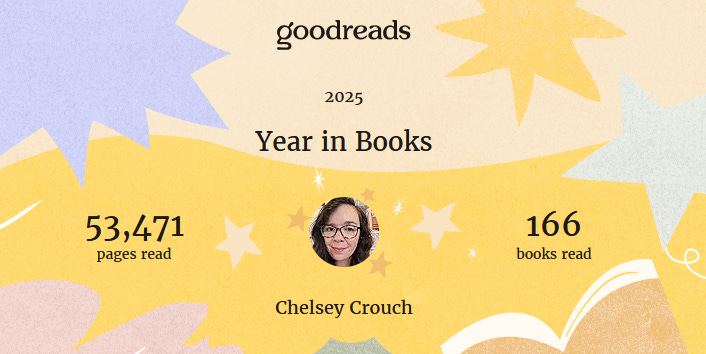
Read 200 books
This is a stretch goal, to be sure, but I will have read more than 170 this year, and adding 2-3 books a month doesn’t feel too crazy. There were also periods this year where I found it difficult to read due to outside circumstances. While I can’t say that 2026 won’t also contain those seasons, I’m proceeding optimistically.
Read more older books
No, that isn’t an ungrammatical sentence. This last year I read very few books that had been published before 2020, let alone in centuries earlier. I want to read older books in 2026—more than I read in 2025. I haven’t attached a number to this; it’s just somethin I want to keep in mind and check in on over the year (yes, I realize this is not a SMART goal but this is my life and my Substack and my reading journey and I don’t care).
Try more fiction
I struggle with fiction, because there is a lot of bad fiction out there (if you think I’m wrong, let’s fight). But I also tend to avoid books that are very popular because I think they will end up being overrated (and I like to be *different*). While I have sometimes found that to be true, I have also discovered amazing books that lots of other people loved. I have no problem with abandoning books if I’m not vibing with them, so I want to risk having more DNFs this year and try more fiction books.
Use StoryGraph
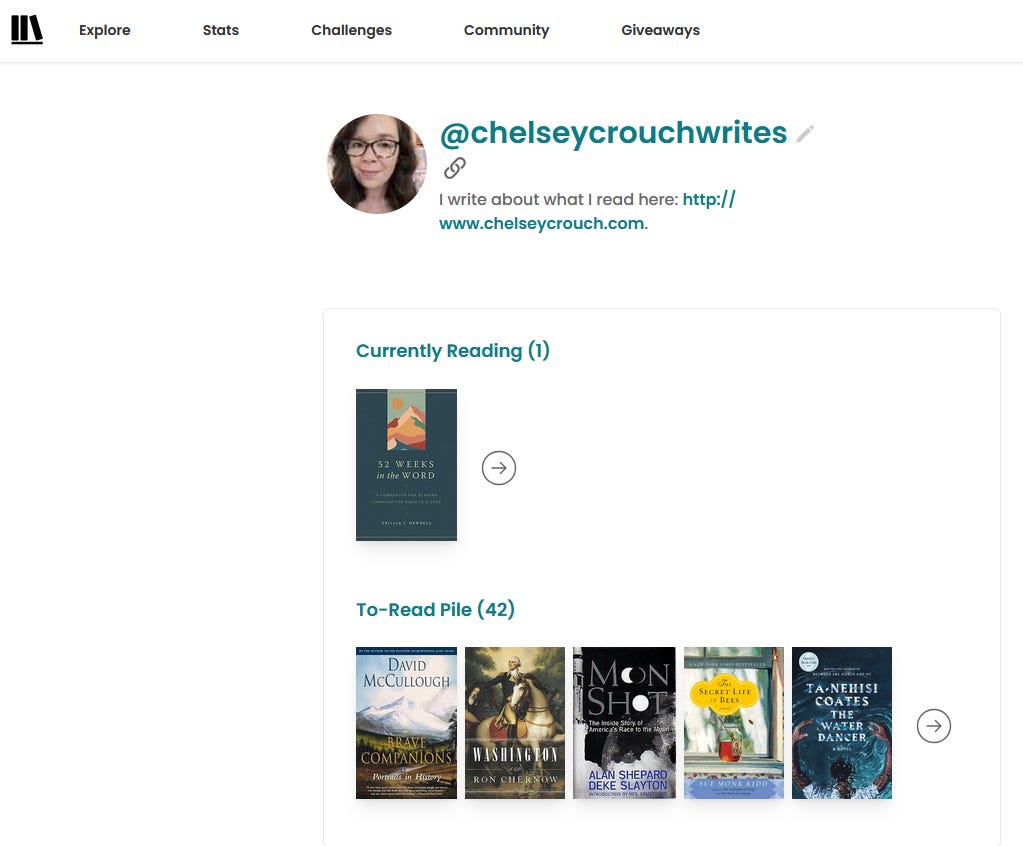
Ever since I began tracking my books, I have used Goodreads. At the beginning of 2025, I wanted to try out StoryGraph, and for a little while I was tracking my books on both. This was not sustainable, so I tried importing my Goodreads library into StoryGraph. But then my brain wanted to go add tags and other things to the books I’d already read so that everything would be consistent. This wouldn’t have been a big deal if I hadn’t imported almost 1,000 titles. I gave up. But over the course of this year, while using Goodreads, I have also been using Notion and have now catalogued all my past-read books there. I am going to try StoryGraph again starting 1/1/26, but I’m not going to import any previoulsy read books. Notion now contains the history of my reading, and I can start fresh with StoryGraph. I really like all the ways it analyzes your reading and also points you to other books you might like. (My StoryGraph profile)
Read the books on my TBR shelf
I have a shelf in the Dopamine Den where I have books I own (or that I have borrowed from Christian’s office) that I want to read. I’d like to clear this shelf off before adding anything else. So if I buy any more books, they will have to live on our downstairs bookshelf until I make room for them on the shelf.
Use my Kindle Paperwhite even more
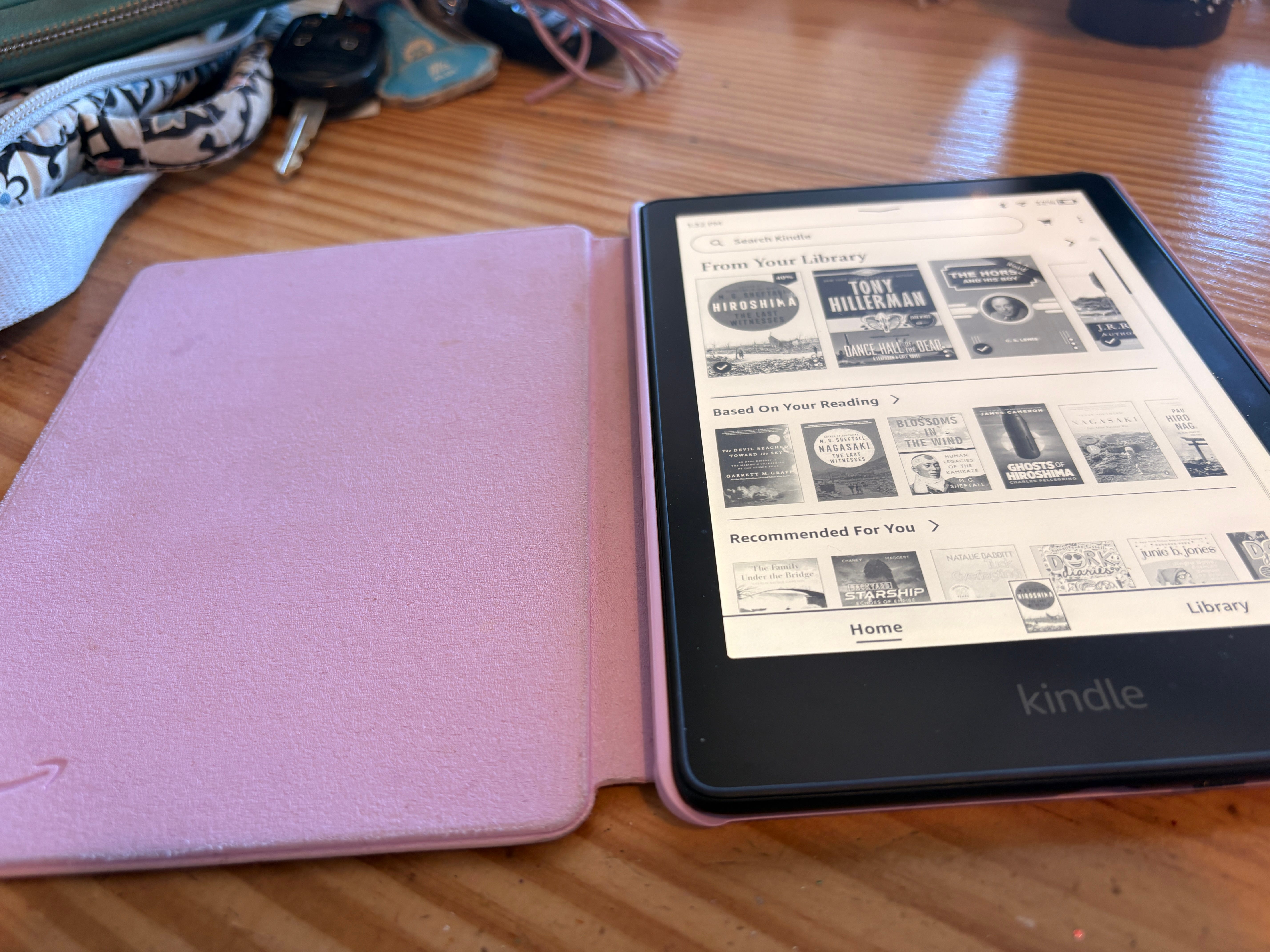
I’ve had my Paperwhite for several years, but it wasn’t until this year that I really started using it. Not only do I have several dozen books I’ve bought for my Kindle over the years, but with Libby, you can check out ebooks to your Kindle. There are sometimes books I really want to read that aren’t available on audiobook, so this has opened up titles I might not otherwise have read.
Meet monthly benchmarks
In order to read 200 books in 2026, I have to read about 17 books a month. This gives me a lot of room to read widely each month, so here are some categories I’d like to read in each month. I hope to check in on this when I do my monthly reading recaps.
3 spiritual books (this is about what I do already)
1 “classic” (subjective to my terms)
1 book NOT written in my lifetime
1 book on writing or reading
Book from my physical TBR shelf
An unread Kindle book
1 book by a person of color (see below)
Read more books by people of color
There were some years where the authors I read varied widely in terms of race and ethnicity. This was not that year. I only read 7 books written by non-white people this year. I value stepping into the shoes of people very different from me, but my reading did not reflect that. I want to change that in the coming year. If I read one book a month, that will still be more than I read this year!
I’m already feeling the eager anticipation of the new year. I’d love to hear your reading goals/plans/intentions for the new year if you’d like to share!