

I was sitting on the exam table at the gynecologist’s office last week and answering the questions they always ask: do I smoke (no), do I drink alcohol (only at weddings), any recent surgeries (ankle surgery last summer)—and then she asked if I had ever had a mammogram.
I immediately felt anxious, because I like to be the most compliant patient in any healthcare scenario, and I was worried that maybe I had failed to meet her expectations in some way.
“No,” I said nervously. “Was I supposed to?”
“Oh, not necessarily,” she said. “We just like to know if you had one for some reason.”
Breathing a sigh of relief that I had not failed a test that no one was actually giving, I asked at what age she recommended getting regular mammograms.
“Oh, not until 40!” she replied cheerily.
If she had had a chance to do some quick math based on my birthday (March 18, 1986) and the current date (March 11, 2026), she might not have replied so flippantly, as if I had all the time in the world before I had to schedule a mammogram, when in fact the guillotine of mammography would be coming down in only one week.
For most of my married life, I have felt too young. We were married at 23 and I had my first baby before I turned 24, when very few people our age were having kids. By the time most of my close friends were having their first child, we were on baby #3 and had two kids in elementary school. It’s only gotten worse as our older boys have grown. The first time I went to a middle school open house, I looked around me and realized that most of the people around me were 5-10 years older than I was. In a lot of ways, it doesn’t matter, but it has still contributed to a kind of imposter syndrome where I feel insecure when I have to interact with people who are in the same role or position or situation because they are older and so I think they are wiser or more mature or more experienced.
When Christian and I were first married and I was pregnant with Stephen, we were part of a church that encouraged having children and where older women speaking into the lives of younger women was highly valued. I sought out the mentorship of a mom who at the time seemed very old to me, although she was only in her mid-30s. I went to her house and helped with household tasks and watched her homeschool her kids and tried to imbibe as much wisdom as I could. This was the kind of woman I knew I was supposed to be. It was the kind of woman I wanted to be.
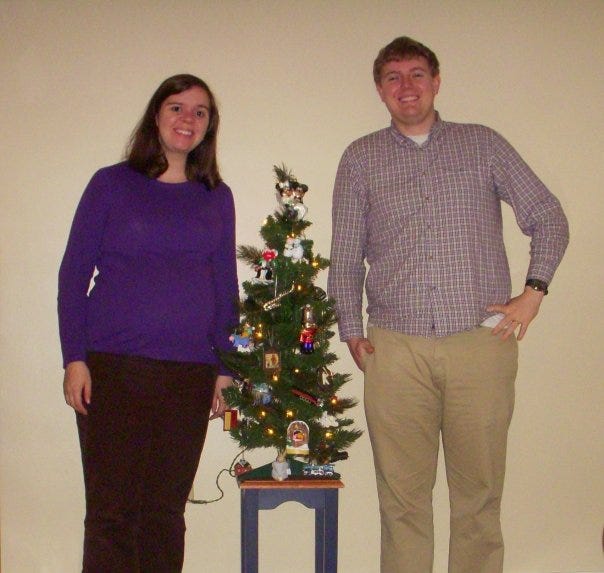
Soon before our first child was born, I was sitting in Sunday School next to Christian. The class was studying the Westminster Shorter Catechism. Each class covered one question and we analyzed the question and the supporting Scripture. At the time, Christian was in seminary, and he launched into a monologue about some aspect of the discussion. He was talking for a long time. I felt he had been talking for long enough. I didn’t say anything, but apparently I had some kind of look on my face. I know this because after class, before the worship service started, this female mentor approached me in the main lobby area and said she wanted to talk to me about something.
I remember I was wearing gray and black maternity dress pants and a magenta maternity shirt. In my mind’s eye, I am in a hallway watching this interaction, seeing a pregnant young woman being cheerfully scolded by a woman she respected.
“We always need to support our husbands,” she said. “When Christian was talking, your face looked like you wished he would stop talking. It seemed like you weren’t interested in what he had to say.”
Well, I wasn’t? I thought. I was kind of bored and also worried everyone else would think he was talking too much.
“When our husbands are talking, no matter what they’re talking about, we should smile sweetly and look at them in encouragement,” she said.
I don’t remember if I said anything to her. I remember that I felt like I was going to cry. Had I really insulted my husband with the look on my face? Had everyone in the class thought I didn’t respect my husband? Was I a less than excellent wife?
Christian worked for the church, and one of his responsibilities was to sit in the sound booth and record the service. I went and found him and immediately burst into tears. I told him what had happened and he was simultaneously confused and bothered.
“I probably was talking too much,” he said as he comforted me.
Up until that point, I had assumed everyone who was old, which to me meant older than 30, and definitely 40, had it all together and knew what they were talking about.
Now I am 40, experiencing a strange dichotomy of feeling very old and also feeling like I don’t know enough about anything to actually be this old. I think back on 23-year-old me, desperate to be a good wife and mom, eager to follow the advice of men and women who eventually turned out to not be right about everything, and in fact to make some very wrong decisions. I think about the times when I have been that woman who scolded me, when I have unknowingly hurt a younger woman. I know now that age is no indicator of whether anyone has it all together, and, in fact, someone thinking they have it all together is actually a pretty good sign that they don’t.1
It is time for me to schedule yearly mammograms, and it is getting a little bit harder to get off the ground after helping Noah with LEGOs, and my oldest son is only 7 years younger than I was when I got married.
I’ve also had a few moments of panic when I’ve been at a doctor’s appointment or spent time with someone who is an expert in their field and realized they’re probably about the same age as I am.
I’m almost 40, I have thought, and what have I accomplished with my life that compares to this person? A spinal surgeon, a physical therapist, an established author, a practiced musician. And me. In what field am I an expert? What have I accomplished? What do I have to show for my life?
I don’t have a medical degree. I don’t have any published works (other than, I guess, this Substack?). I never earned more than a bachelor’s degree. While I have worked for most of our marriage in some capacity, I’ve never had a job that anyone would consider valuable or esteemed. My dream of becoming fluent in a foreign language and working in national intelligence dissipated once I met a blue-eyed boy from Tennessee my sophomore year of college. When he was getting his M.Div., I was nursing a newborn and chasing a toddler and trying not to drown.
I don’t say all this in order to elicit pity or because I’m resentful. I’m also not fishing for compliments. Reflecting on the past and on what I’ve “accomplished” in these first forty years of life has forced me to reckon with what I think is important—and what God thinks is important. And not just important for anybody, because of course it is important that some people become doctors or ambassadors or foreign intelligence agents, but important for me. This life I’ve had for four decades was planned out for me before I left my mother’s womb, and I am only just now beginning to make sense of it.
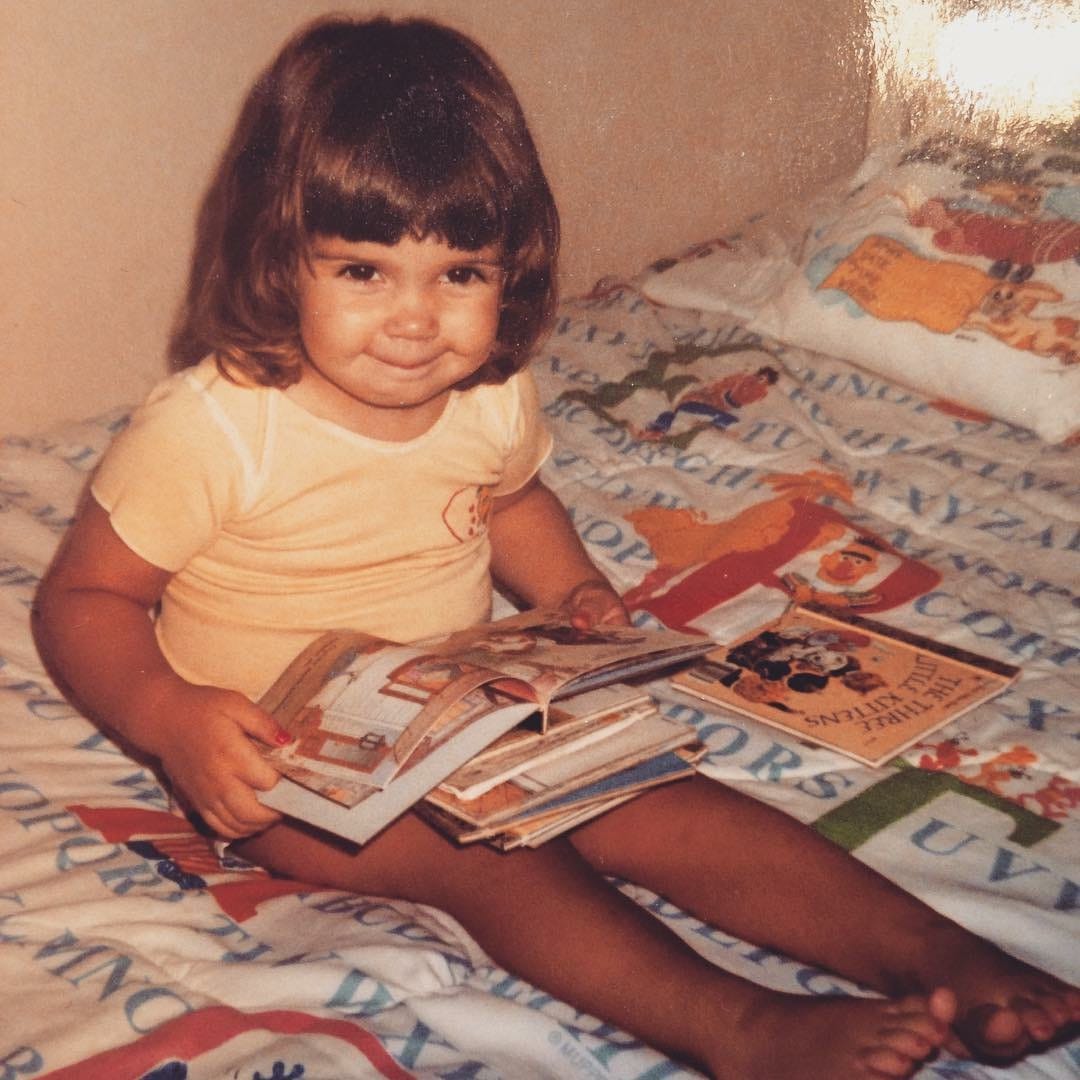
I was born in Florida in 1986, which one day would classify me as an elder millennial. Being born at this time in history meant that I was 13 years old and in the throes of puberty when Y2K arrived, and I was sitting in my 10th grade Algebra 3 class when the planes hit the Twin Towers. My first presidential election was in 2004, when I proudly voted for George W. Bush, because I did not believe Christians could in good conscience vote for anyone who was not a Republican. I was 18, and I pretty much had life figured out.
It didn’t take long for me to realize I actually didn’t.
Here are some things that happened in my 20s: debilitating depression, a long-distance relationship, marriage, pregnancy, childbirth, moving, the loss of my grandmother, pregnancy, childbirth, moving, a painful church departure, unemployment, moving, and then an extremely painful church implosion culminating in a mental breakdown. It was toward the end of my 30th year of life that we settled into a new church, which meant a new job for Christian, and soon after turning 31, I found out I was pregnant.
Here are some things that happened in my 30s: a complicated and high-risk pregnancy, moving, childbirth, postpartum depression, the loss of my grandfather, a horrific work situation, another painful church situation, another complicated and high-risk pregnancy, childbirth, moving out of state, a global pandemic, and postpartum depression. That actually all happened in the first half of my 30s. These last five years have been marked by fewer major events like those listed and more low-grade, constant stressors like, well, being married to a pastor.
There has not been any one year or even portion of a year in the last twenty years that has not been marked in some way by something difficult. Surely, surely, working at the CIA as a language analyst would have been easier than this has been?
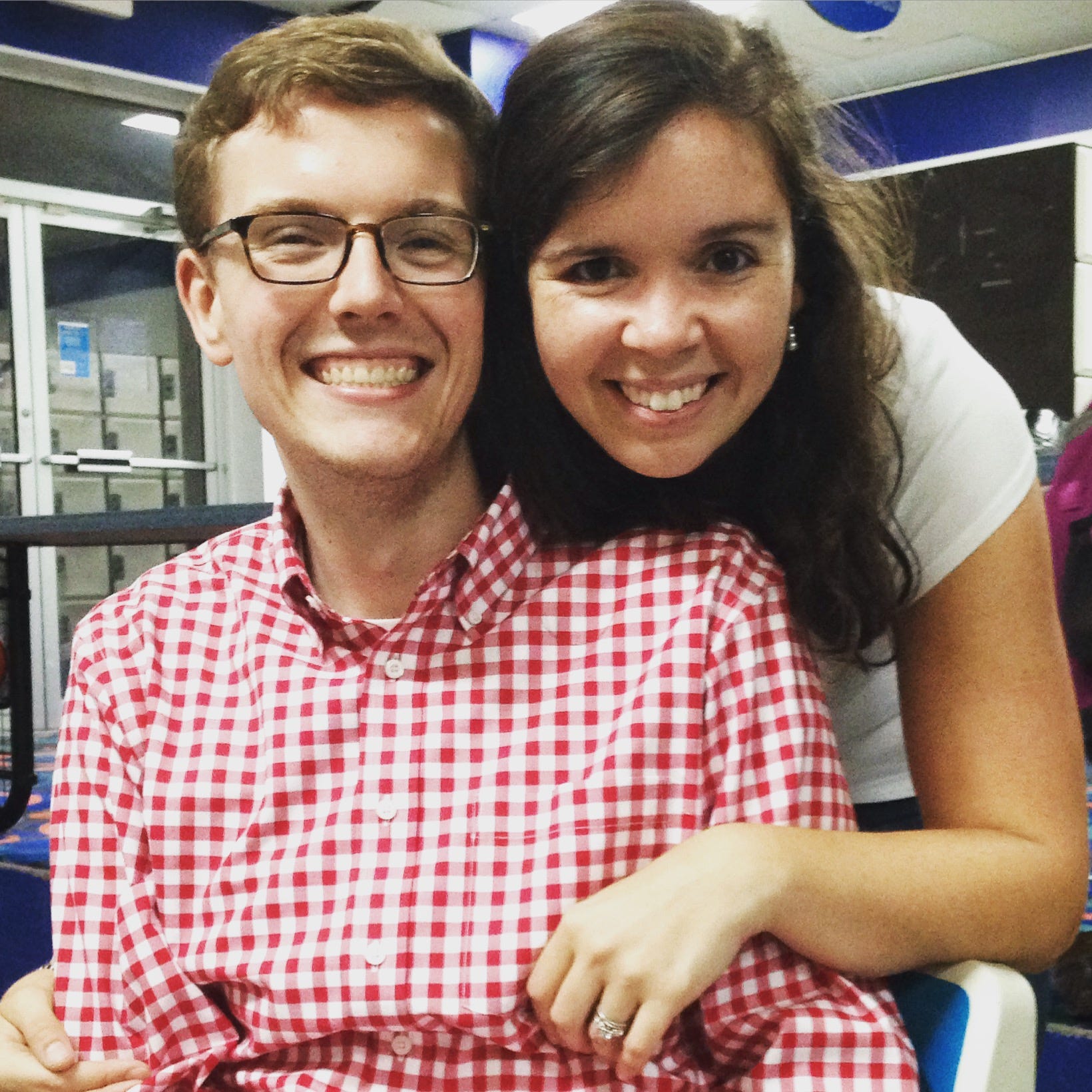
There are so many things I wish I could go back and tell my younger self. The lessons I have learned in what I’ve experienced as well as what those experiences have shown me about my earlier life would not have happened if the hard things hadn’t happened. Growth has happened in suffering. I still have a long way to go. But 23-year-old me would not recognize 40-year-old me, although she would be very jealous of my extensive marker and pen collection.
If I could go back and tell her what she has learned that has changed her the most, here is what I would say.
You might be part of the reason why something hard is happening. For many years in my 20s and even into my 30s, I was very lonely and felt like I did not have any friends. Part of this was because we kept changing churches due to circumstances outside my control. I had very little continuity in relationships, and the nature of ministry life is such that it is hard to maintain multiple relationships outside of church when you are also pouring your entire life into your church. But I also think that I was not very good at being a friend. I liked to talk about myself. I wasn’t very good at empathizing with others’ pain. I was turned inward. I very much wanted to be loved and cared for as a friend, but I wasn’t aware of how little of that I was offering to others.
Normalizing someone’s emotions for them is one of the greatest things you can offer another person. This is so easy. It’s so easy it almost feels silly to say. But if someone tells you about something hard they are experiencing and how it’s making them feel, saying something like, “It makes sense you would feel sad that you aren’t able to breastfeed your baby,” might give them some hope. So much of the angst a human experiences is not only certain emotions but the emotions about those emotions. We can feel guilt or shame for our feelings of anger, sadness, joy, grief, anxiety. Normalizing appropriate emotions for someone can help them release a lot of emotional pressure. It might not stop them from feeling sad, but it might take off the baggage of feeling sad.
The hardest things you go through will be because of other people. Being in close proximity to humans guarantees pain and suffering. We have never lived a private life. It is impossible in ministry. This is a blessing, because it forces us to live outside our little bubble, and it can also be extremely painful. I was just talking with the wife of a pastor about how when people stop coming to church or leave the church, sometimes I want to say that I wish I could leave, too. Maybe if I wasn’t around people, people wouldn’t hurt me? But I am, and they will, and knowing it is inevitable makes it just a teensy bit less painful when it does.
The best things you experience will be because of other people. This is not a surprise, because God is a relational being and he made us to be in relationship. It is very hard not to be in any relationships, and those who manage it don’t seem to be very happy. I don’t have enough room to write about the ways other people have blessed us. There are the tangible: A seminary education. Free vehicles. Discounted rent. Free car repairs. Meals upon meals upon meals. Free babysitting. These only happen in relationships. Then there are the intangible: prolonged checking in during hard seasons, prayer, remembering important days, believing our stories about painful experiences. God has used people to help heal the wounds created by people. It doesn’t make any sense, but it’s how it is. The lesson is this: Don’t stay away from people, even when you want to.
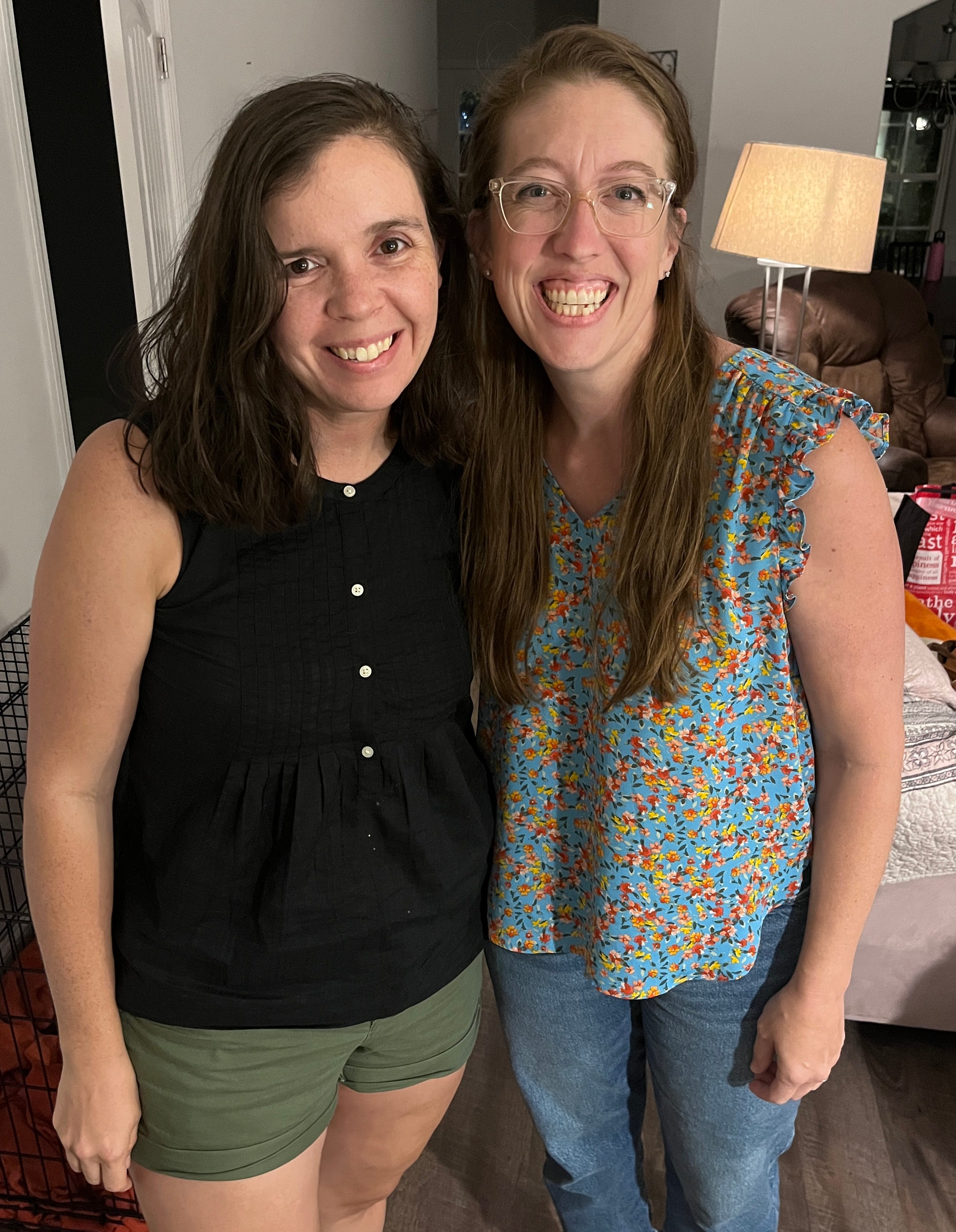
Once you figure out how to be a good friend, you will have a lot of failed friendships, but eventually, a few will stick. The very best friends I have ever had are friends I have made in the last five years. I can only pray these women are friends who I will have for the rest of our lives. What would I do if I did not have a few good friends with whom I can share some of my deepest aches and greatest joys? The fact that I have more than one friend like this is a gift I do not deserve. I can’t take much credit for it, because I could tell you right now ways that I have failed each of these friends. But they have shown patient and forbearance toward me, and I try to do the same for them, and I am so grateful.
Marriage will change you if you let it. I thought I was pretty great when I got married, and Christian seemed to think so, too. It wasn’t long, though, before I realized that I had an anger problem. This was surprising because I didn’t think I had ever been angry. Marriage brought with it many circumstances in which I found myself angry, some that were legitimate and many that weren’t. Each situation required me to talk to Christian and for us to work it out. We were very bad at this, but we have gotten better. Each conflict, each argument, each misunderstanding, each miscommunication has given me the opportunity to decide if I want to act in the same way I always have, or if I am going to listen to the Holy Spirit and take one step in a different direction. This step is almost always painful and is always humbling. But I think, in 17 years of marriage, that I am less angry, yes, but I am faster to repent of my anger and to realize what’s at the bottom of it. I’m not at the end of the road, but I’m farther down the road than I was. (Also, I am really grateful for my husband, and I’m not just saying that because he reads every single post I wrote. He’s my best friend.)
Parenting is going to be a big hot mess and no one has it figured out completely. I would have thought by the time I had a 16-year-old that I would pretty much be an expert on parenting, but here’s the thing: you never stop parenting your kids, and no two kids are the same, and each time you kind of figure out an age or stage the kid gets older and enters a new age or stage that you have no experience with. Other people can offer wisdom but only you can parent your kids. Be encouraged that all the mistakes you make when your kids are young won’t seem to have a lasting negative effect on them. But be challenged by the fact that it’s very easy to get in parenting ruts and it’s very hard to change the trajectory once you’ve settled in. One good thing is that your kids are always going to love you, even when it doesn’t seem like they do, and on the rare occasions when you realize how much you love them and that you love them ten thousands more and would literally die for them, you’ll wish you could bottle up that feeling.
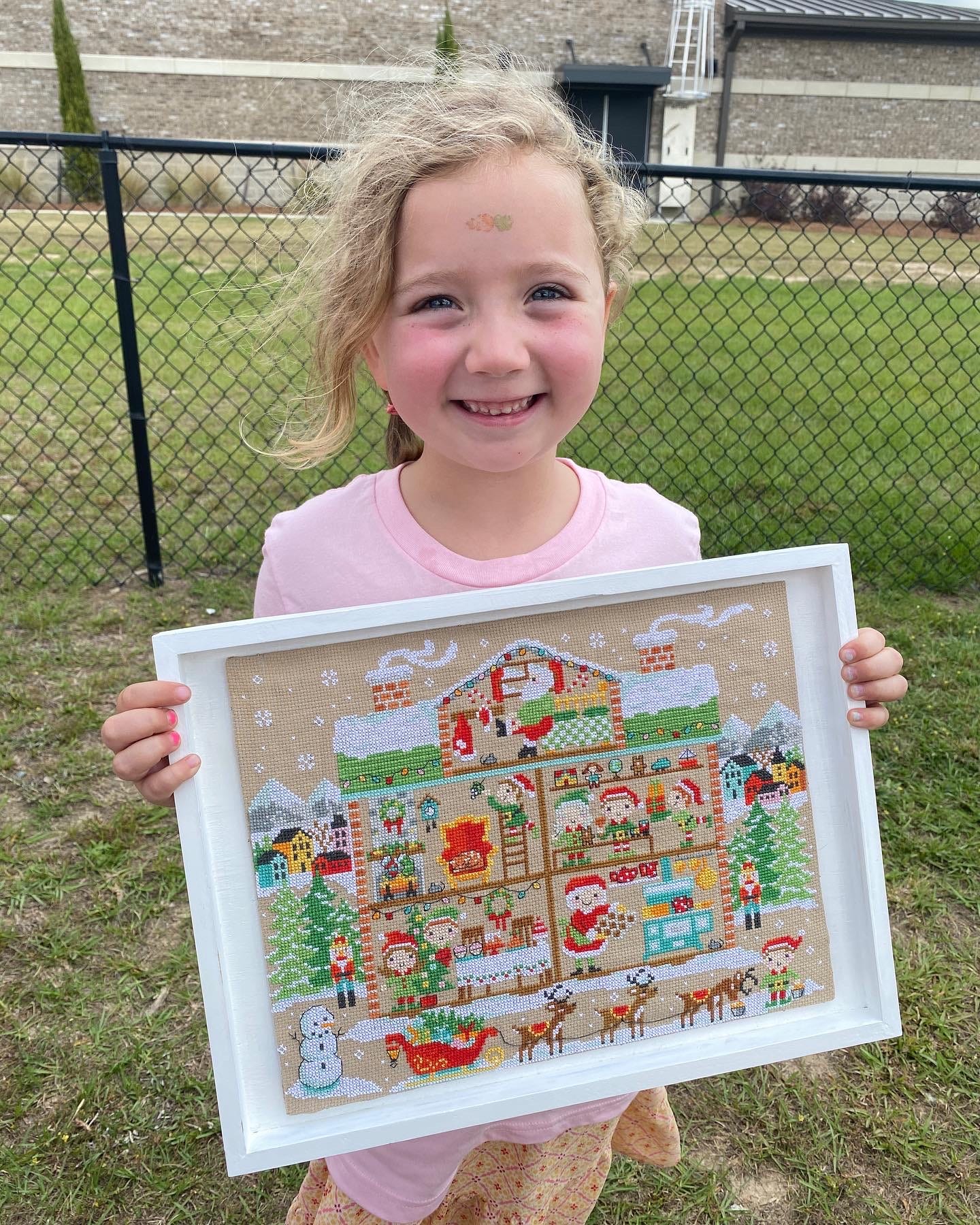
Find something that you love to do, and find pockets of time in which to do it. For me, that has been reading, exercise, writing, and needlework. I was doing almost none of these things 20 years ago, although I had loved to read when I was younger. All of them bring me joy now on a daily basis, and I wish I had pursued any one of them sooner.
Just acknowledge that you’re a dork or a nerd or whatever the kids are calling it these days. I love to read. I have read over 100 books a year for the last 7 years. I have made spreadsheets about every important thing in my life that could be expressed on a spreadsheet. I love making trackers and tracking things. I love budgeting and working on our budget. I love grocery shopping and finding the very best deal on anything. I don’t buy anything without researching it to death. I have an inordinate amount of knowledge in my brain about the Holocaust, cults, narcissism, serial killers, psychology, neuropsychology, theology, nutrition, and random historical figures. I have almost mastered the Russian language course on Duolingo. These are all things I am interested in. I’m kind of done with being embarrassed about these things, although if I sense you are not interested in these things, I have learned how to change the subject. But I’ve also found that if I take a cautious step and mention one of these interests, I might just find a kindred spirit.2
It’s a wonderful thing to be a Christian. I am paraphrasing that quote from Dr. Sinclair Ferguson, who is one of my favorite pastors and authors. He often ends his sermons with, “Isn’t it a wonderful thing to be a Christian?” I can’t say that doubt has been something I’ve struggled with over the time that I’ve known the Lord. But we have experienced deeply painful things, and many of them have been aimed at us from other Christians in Christian contexts. At times I have thought, “Is following Jesus worth it?” While I am sure I will still have seasons of despair in the future, I can say at least after the first 40 years of my life that yes, it is worth it, and even more than that—it’s wonderful to know the Lord. Especially in these last ten years, my greatest comfort has been knowing that I am cared for by a God who is gentle with broken hearts, who loves the truth and who sees all things, and who is using the hard things I’ve gone through to soften my heart and make me someone who loves other people better.
Today, I am 40. I kind of want to cry, but I also want to take all that the last forty years have held for me and carry them with me into the next forty years. May the following words, written by one of our youngest son’s namesakes, William Cowper, continue to be the theme of my life.
God moves in a mysterious way
His wonders to perform;
He plants his footsteps in the sea
And rides upon the storm.
Deep in unfathomable mines
Of never failing skill
He treasures up his bright designs
And works his sov’reign will.
Ye fearful saints, fresh courage take;
The clouds ye so much dread
Are big with mercy and shall break
In blessings on your head.
Judge not the Lord by feeble sense,
But trust him for his grace;
Behind a frowning providence
He hides a smiling face.
His purposes will ripen fast,
Unfolding every hour;
The bud may have a bitter taste,
But sweet will be the flow’r.
Blind unbelief is sure to err
And scan his work in vain;
God is his own interpreter,
And he will make it plain.3
See also: the Dunning-Kruger effect
Christian used to tell me that I shouldn’t talk about the Donner party so much, but then I discovered that one of the elders at our new church had read the same book I had read! He is now one of my book friends. Hi, Billy!